Dissecting a millfolio question
End to end: the exact prompt the frontier model receives, the Mojo program it writes, and the raw sentinel-delimited output that program prints — for one real run over the synthetic demo vault.
the model writes code, not reads data runs locally in a Seatbelt sandbox Claude wrote the program · Qwen renders on-device
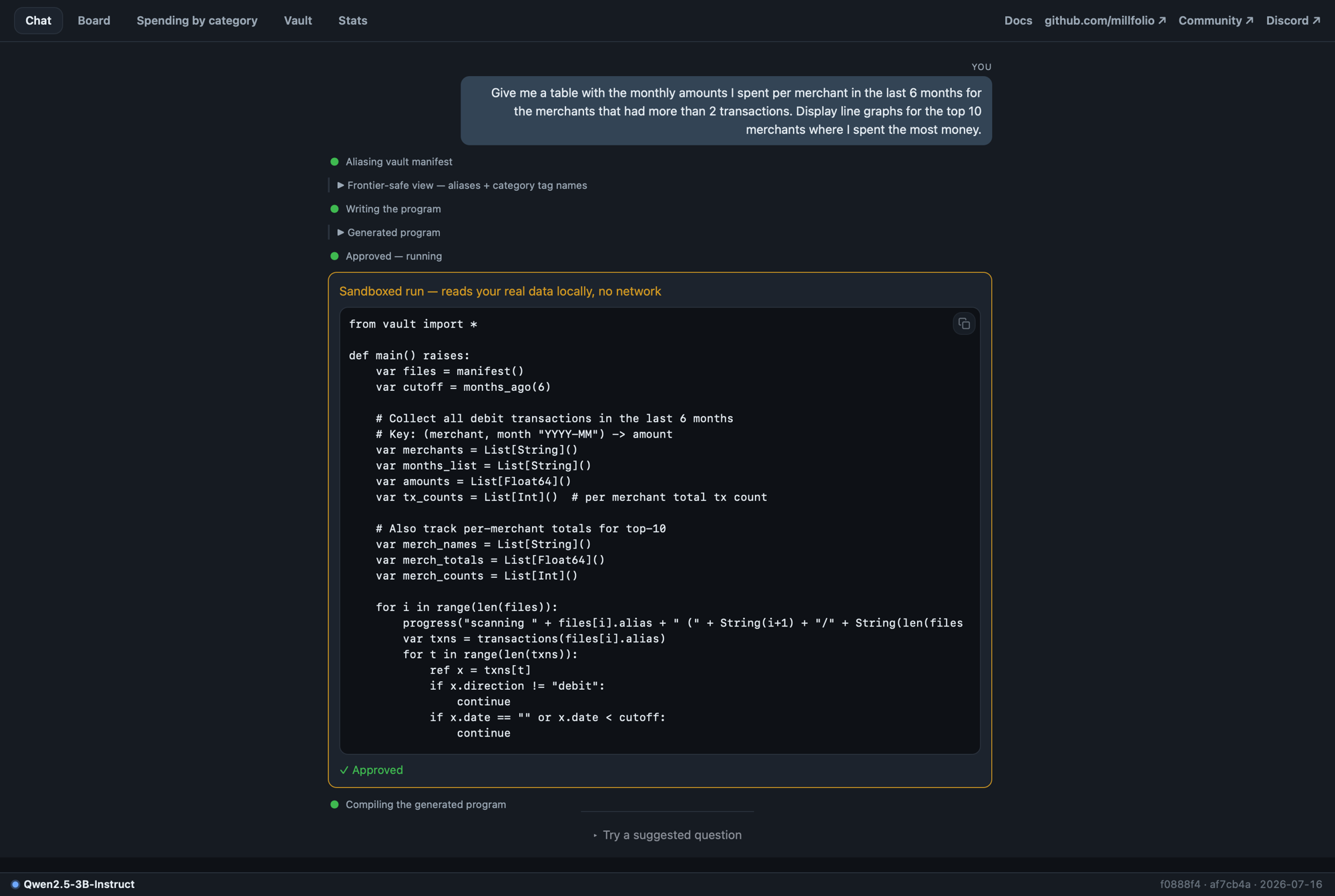
from vault import * program the frontier model wrote, verbatim (158 lines), syntax-coloured.What it produced
The chat view — the workflow steps and the generated program in the sandbox panel:
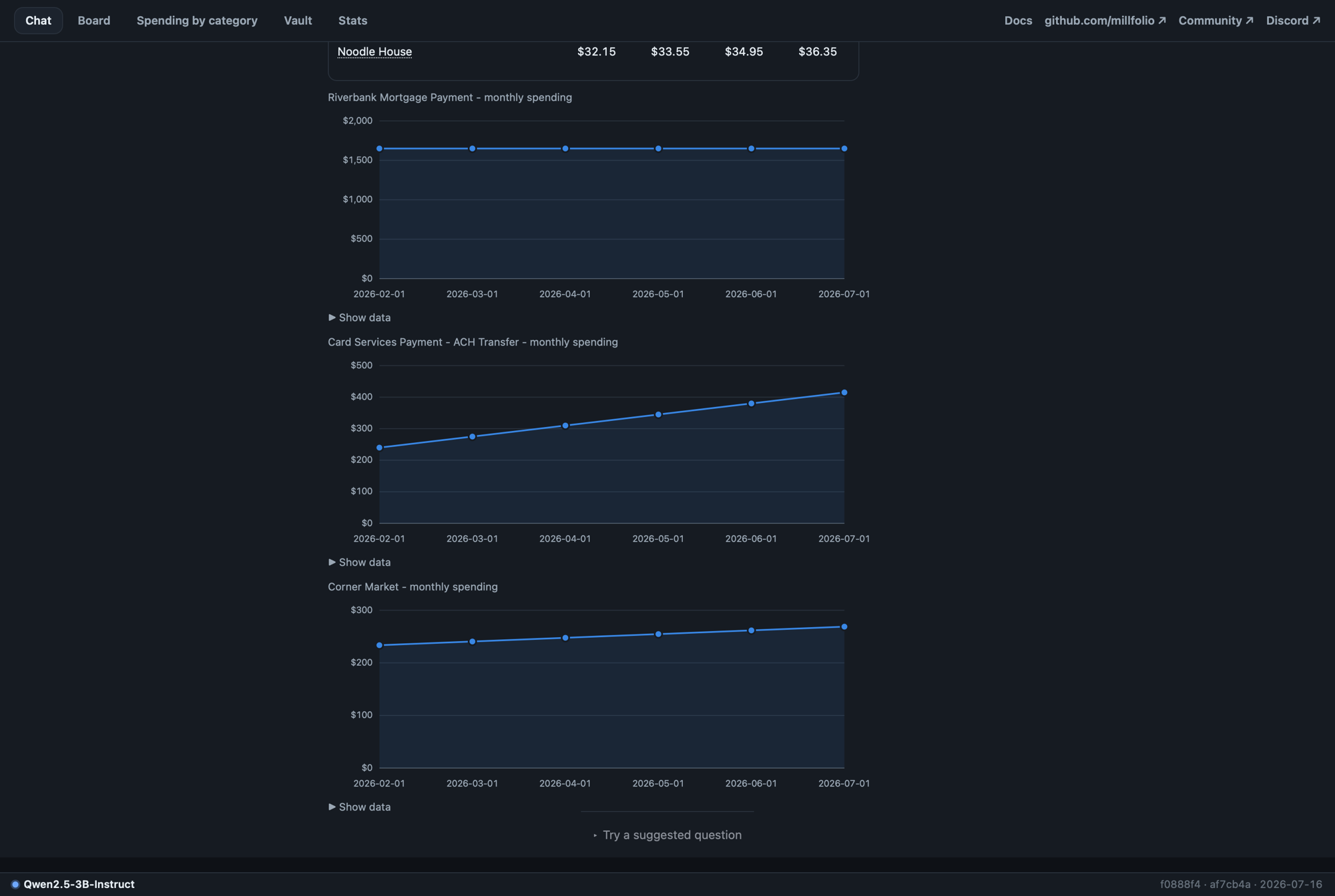
The rendered result — the monthly table and per-merchant line graphs:
The AI-tag flow — a reusable, on-device classifier
Some questions aren't a keyword match — “fixed monthly bills” needs judgment. When a
generated program classifies transactions with the on-device model, millfolio offers to turn that judgment into a
reusable AI tag: a plain yes/no prompt the local model answers for every transaction, cached on
.tags so future questions filter with no model call at all.
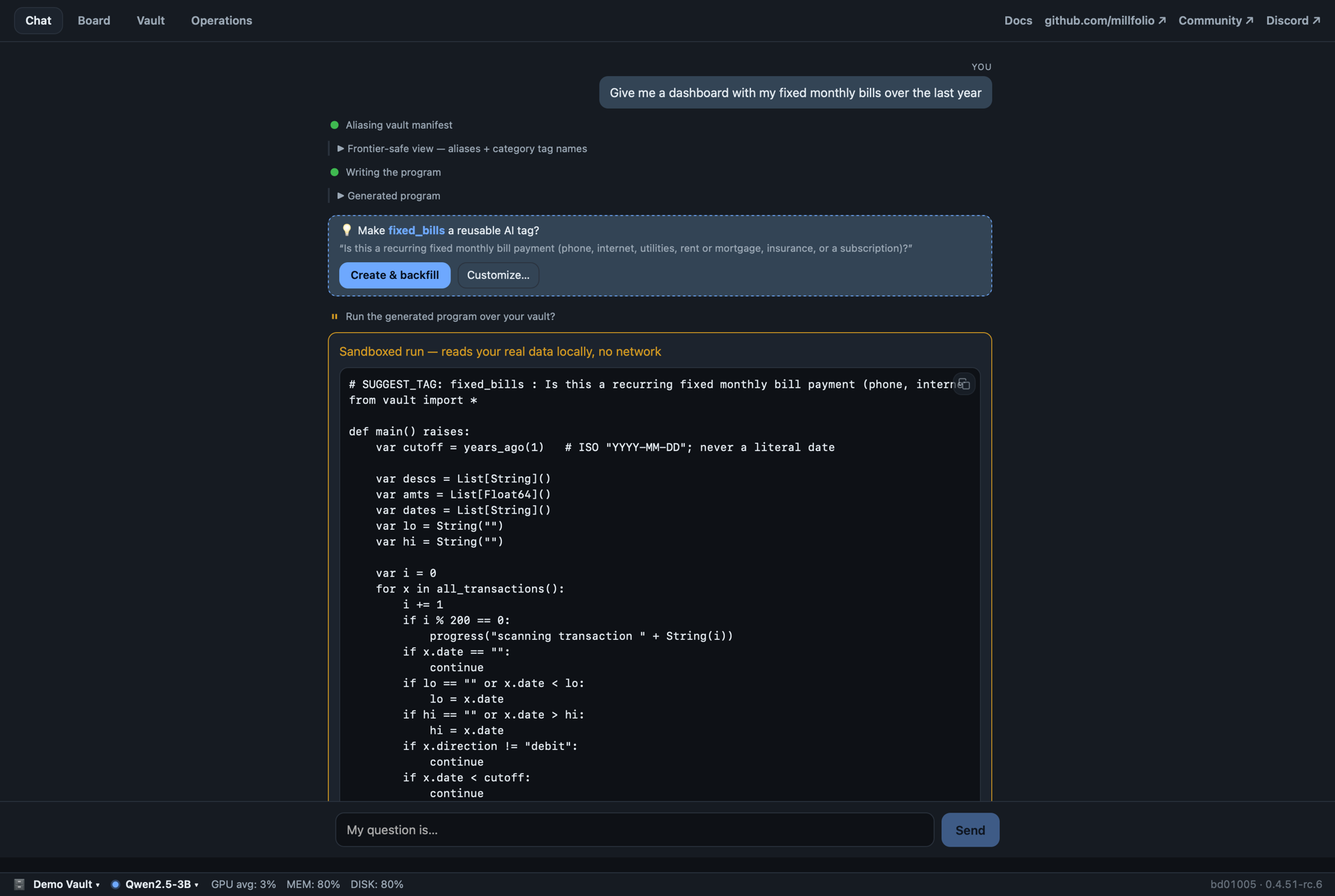
The frontier model proposes fixed_bills as a reusable tag with a one-line yes/no prompt —
“Is this a recurring fixed monthly bill payment (phone, internet, utilities, rent or mortgage, insurance, or a subscription)?”
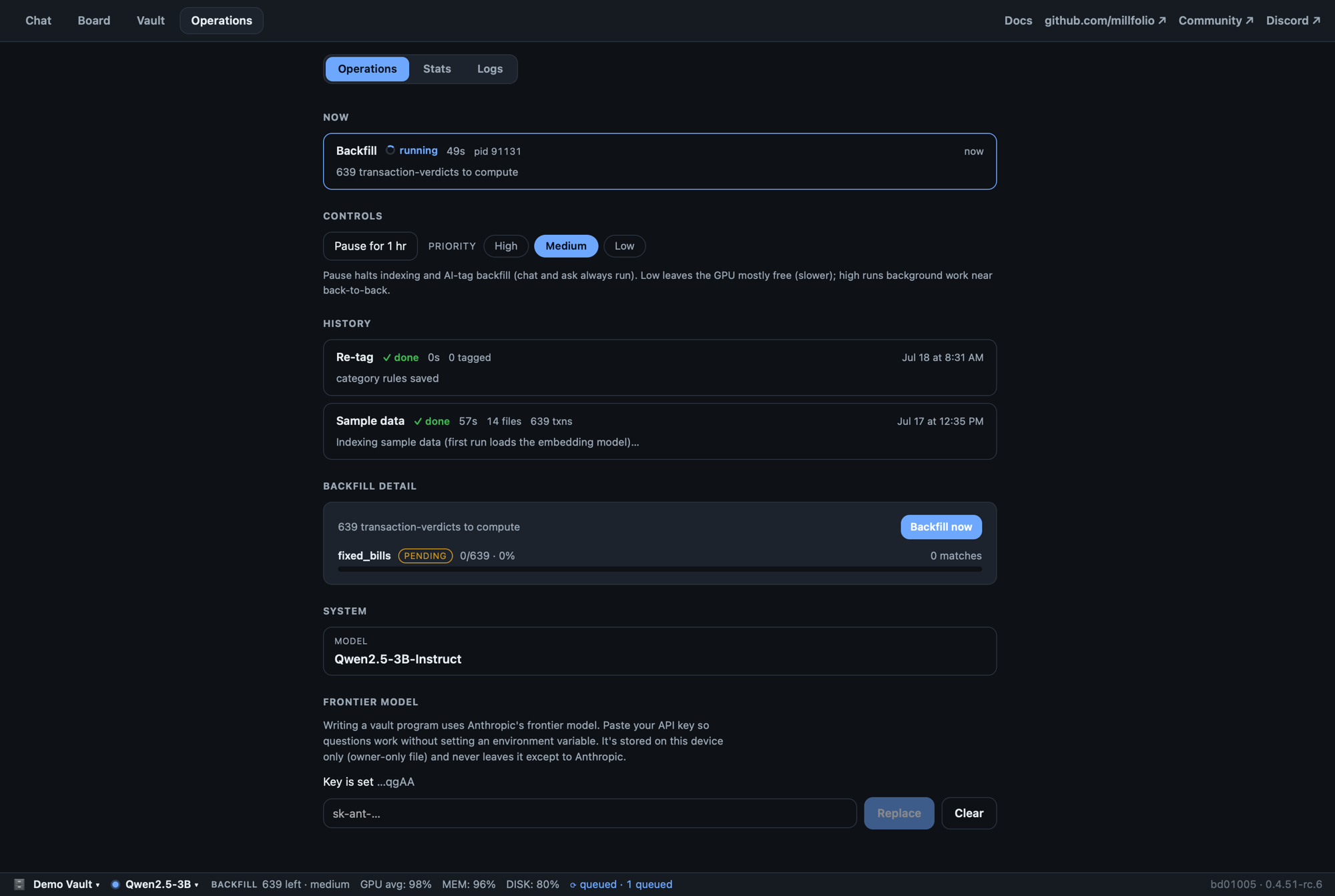
Creating it kicks off a backfill — the on-device Qwen model computes a yes/no verdict for every transaction (639 here), entirely local, never through the EgressGuard. Priority controls keep it out of the way of interactive questions. From then on the tag is instant.